The Program
12 Saturdays. From a community need to real action.
The GAB Youth Civic Leadership & Community Action Lab is built around learning by doing. Over twelve Saturdays, participants move through the complete life cycle of a community project: identifying a need, designing a response, building a budget, presenting and defending an idea, participating in a structured selection process, planning implementation, taking action, measuring results, and reflecting on what they learned.
Participants do not simply study leadership concepts. They use them.
LearnDesignDebateVotePlanActMeasureReflect
The learning model
Every session moves the work forward.
Most regular Saturday sessions are approximately two hours and combine a short practical lesson with team-based project work. Participants are expected to produce something tangible throughout the program — a needs map, proposal, budget, presentation, implementation plan, impact report, or reflection.
Community Action Days are different. These are longer supervised activities during which selected projects move from planning into real community action.
- Small teams
- Participants work closely enough that each person can contribute meaningfully.
- Real deliverables
- Each stage produces a document, decision, presentation, plan, or measurable result.
- Real responsibility
- Youth have meaningful roles while adults retain responsibility for safety, finances, permissions, transportation controls, and other adult obligations.
The 12 sessions
Week by week
What participants do, from Week 01 to Week 12.
Week 01
Understanding Community Needs & Leadership
Start by understanding the community before trying to change it.
Participants begin by exploring what a community is and what service-oriented leadership looks like in practice.
They learn to distinguish a community need from a proposed solution and examine the people, organizations, assets, and challenges that exist around them.
Through a community-mapping exercise, participants identify issues they believe deserve attention without immediately deciding how those issues should be solved. The group then begins forming balanced teams around shared areas of interest.
By the end of the session
- Community Needs Map
- Shortlist of 2–3 issues per team
- Team roster
- Team working agreement
Week 02
Designing a Community Project
A good intention becomes a project only when the details begin to work.
Teams select a community need and begin turning it into a realistic project proposal.
Participants learn how to identify who would benefit, define an objective, outline activities, estimate the resources required, build a basic budget, identify potential partners, consider permissions, recognize possible risks, and decide how success could be measured.
Teams are challenged to answer practical questions:
- What are we trying to accomplish?
- Why does it matter?
- Who benefits?
- Where will it happen?
- What needs to happen first?
- What will it cost?
- What could go wrong?
- How will we know whether it worked?
Participants are also introduced to donated resources and responsible stewardship.
By the end of the session
- Draft Community Project Proposal
- Draft budget
- Preliminary risk and permission list
Week 03
Proposal Development & Pitch Preparation
A strong project also needs a clear case for why it should move forward.
Teams refine their project proposals and prepare to present them to the cohort. Participants practice clear public speaking, evidence-based reasoning, respectful disagreement, answering questions, and explaining an idea concisely.
Each team conducts practice pitches and receives feedback before finalizing its proposal.
The goal is not simply to “sell” an idea. Participants must demonstrate that they understand the community need, the proposed response, the resources involved, and the practical challenges of implementation.
By the end of the session
- Final written proposal
- Five-minute project pitch
- Pitch materials or presentation
- Q&A preparation
- Speaking roles
Week 04
Community Project Assembly & Selection
Ideas are presented, questioned, evaluated, and decided through a transparent process.
Each team formally presents its proposal and responds to questions from the group. Participants evaluate proposals using published criteria such as community benefit, potential impact, feasibility, inclusion, and responsible use of resources.
Projects must also pass an adult feasibility review covering safety, permissions, budget, timing, organizational capacity, and other practical requirements. Only feasible projects move forward for selection.
Participants then take part in a structured, nonpartisan decision-making process to determine which eligible projects the cohort will implement. After selection, the competition ends. The entire cohort becomes one implementation team.
By the end of the session
- Completed presentations
- Project scoring
- Voting record
- Selection decision
- Staff feasibility approval for selected projects
Week 05
Project One — Implementation Planning
The selected idea now has to survive contact with the real world.
The cohort converts the first selected proposal into an operational plan. Participants break the project into specific tasks, responsibilities, deadlines, materials, purchases, community contacts, permissions, logistics, and success measures.
Youth leadership roles may include project coordination, operations, budgeting and resources, community outreach, communications, safety and logistics, and impact measurement.
Youth help build and understand the project budget, but adults retain responsibility for financial transactions, purchasing, transportation controls, permissions, and safety-sensitive decisions. Before the Action Day, staff conduct a formal readiness review.
By the end of the session
- Implementation Plan
- Youth role assignments
- Approved project budget
- Purchase and materials list
- Safety and logistics checklist
- Action Day plan
Community Action Day 01
The first project leaves the planning room.
Week 06 — Community Action Day One
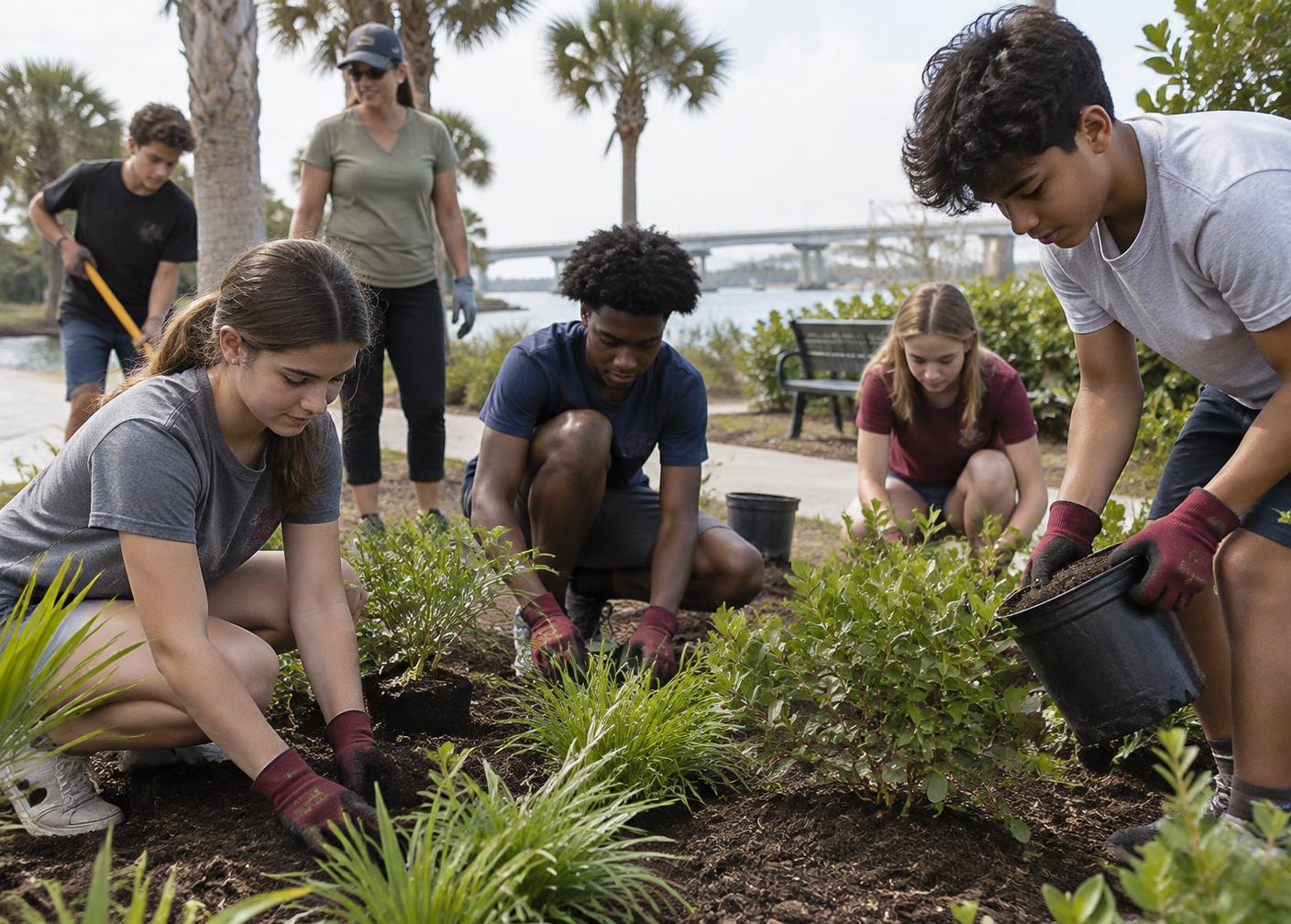
Participants help carry out the first youth-selected community project under adult supervision.
The day begins with participant and adult check-in, a safety briefing, confirmation of roles, and review of the emergency plan. Youth then perform their assigned project responsibilities while approved adults retain control of financial transactions, vehicles, permissions, tools, and other safety-sensitive matters.
Throughout the activity, the team documents what was accomplished and collects the project-specific information that will later be used to measure results. Possible documentation may include attendance, project outputs, approved photographs, materials used, and other indicators relevant to the selected project.
The result
- A completed community activity
- Project documentation
- Output data
- Attendance records
- Financial documentation
- Incident documentation if required
The exact format, location, activities, and duration of each Community Action Day depend on the youth-selected project and required safety, permission, and operational approvals.
Week 07
Project One — Measurement & Impact Report
Completing an activity is not the same as understanding its impact.
Participants return to the original plan and compare expectations with what actually happened. The cohort reviews project outputs, actual spending, unexpected challenges, changes made during implementation, and lessons learned.
Participants also learn the importance of financial reconciliation and honest reporting.
The goal is not to make every project appear perfect. The goal is to understand what happened and what could be improved.
By the end of the session
- Community Impact Report One
- Budget reconciliation
- Project results
- Lessons-learned log
Week 08
Guided Leadership Review
The project is reviewed — and so is the way the team worked together.
Participants reflect on communication, responsibility, disagreement, decision-making, teamwork, stewardship, and execution during the first project cycle. The group identifies what worked well and where improvement is needed.
Participants are also asked to consider their own contribution and leadership habits.
Leadership responsibilities are then rotated so additional participants can experience meaningful responsibility during the second project cycle.
By the end of the session
- Mid-cycle reflection
- Leadership lessons
- Personal areas for improvement
- Role rotation plan
Week 09
Project Two — Implementation Planning
The second project begins with something the first project did not have: experience.
The cohort prepares the second selected project using the same disciplined planning process, but participants are expected to apply lessons from Project One. New leadership roles allow different youth to take responsibility.
Teams revisit budget, logistics, permissions, safety, materials, communications, and impact measures.
Participants must also explain what they are doing differently from the first project and why.
By the end of the session
- Project Two Implementation Plan
- Updated youth roles
- Approved budget
- Safety and logistics plan
- Action Day checklist
Community Action Day 02
Experience becomes greater responsibility.
Week 10 — Community Action Day Two
Participants implement the second selected community project under the same adult safety and operational framework used during the first Action Day.
The difference is experience. Youth are encouraged to demonstrate stronger preparation, clearer communication, improved teamwork, and greater independence within the responsibilities they are prepared and authorized to handle.
The team again documents outputs, participation, project activity, and other information required for the final evaluation.
The result
- Second completed community activity
- Project documentation
- Output data
- Attendance records
- Financial records
- Incident documentation if required
Week 11
Project Two — Measurement & Impact Report
The question is no longer only “What happened?” It is also “Did we improve?”
Participants measure the results of Project Two and compare what happened with the original objectives.
The cohort prepares its second Community Impact Report and examines the project alongside the first implementation experience.
Participants look for evidence of improvement in planning, responsibility, teamwork, communication, adaptability, and execution.
By the end of the session
- Community Impact Report Two
- Budget reconciliation
- Comparison with Project One
- Comparative lessons learned
Week 12
Final Review, Presentations & Recognition
The final week turns twelve Saturdays of work into lessons participants can carry forward.
Participants complete the program’s final assessment and reflect on how their confidence, communication, teamwork, planning, budgeting, problem-solving, and community engagement developed throughout the cohort.
Teams present the projects they completed, explain what happened, and share what they learned. Participants are asked to identify both successful decisions and areas where they would approach a future project differently.
Completion and participation are recognized, and the cohort closes by looking at ways young people can continue participating in service, leadership, volunteering, and future community initiatives.
By the end of the program
- Final presentations
- Post-program assessment
- Participant reflection
- Certificate of completion
- Cohort evaluation summary
Youth leadership in practice
They do not all have the same job.
During project implementation, participants may take on different responsibilities based on the needs of the project. Roles rotate so leadership opportunities are shared across the cohort.
- Youth Project Lead
- Helps coordinate the team and keep decisions and responsibilities organized.
- Deputy / Operations
- Supports task completion and day-of-project operations.
- Budget & Resources
- Helps develop the project budget, identify donated resources, and prepare purchase requests for adult approval.
- Community Outreach
- Helps prepare approved communication with potential partners, volunteers, or community contacts.
- Communications
- Helps explain the project through presentations, approved messaging, signage, and documentation.
- Safety & Logistics
- Works alongside adults to think through supplies, site flow, weather, protective equipment, transportation considerations, and check-in procedures.
- Impact & Data
- Helps determine what information should be collected to understand whether the project achieved its objective.
Youth help design budgets and make project decisions. Adults retain control of all financial transactions, permissions, transportation, safety-sensitive decisions, and institutional responsibilities.
How projects are chosen
Youth voice is real. Feasibility comes first.
Each team develops a community project proposal.
Before a proposal can move into the final selection process, GAB Community Institute staff review whether it can reasonably be completed safely, legally, financially, and within the program timeline.
Step 1 — Staff feasibility review
- Eligible for selection
- The project can move forward as proposed.
- Eligible with conditions
- The idea may proceed if identified requirements are resolved.
- Not yet feasible
- The proposal cannot move forward in its current form.
Step 2 — Participant evaluation of eligible proposals
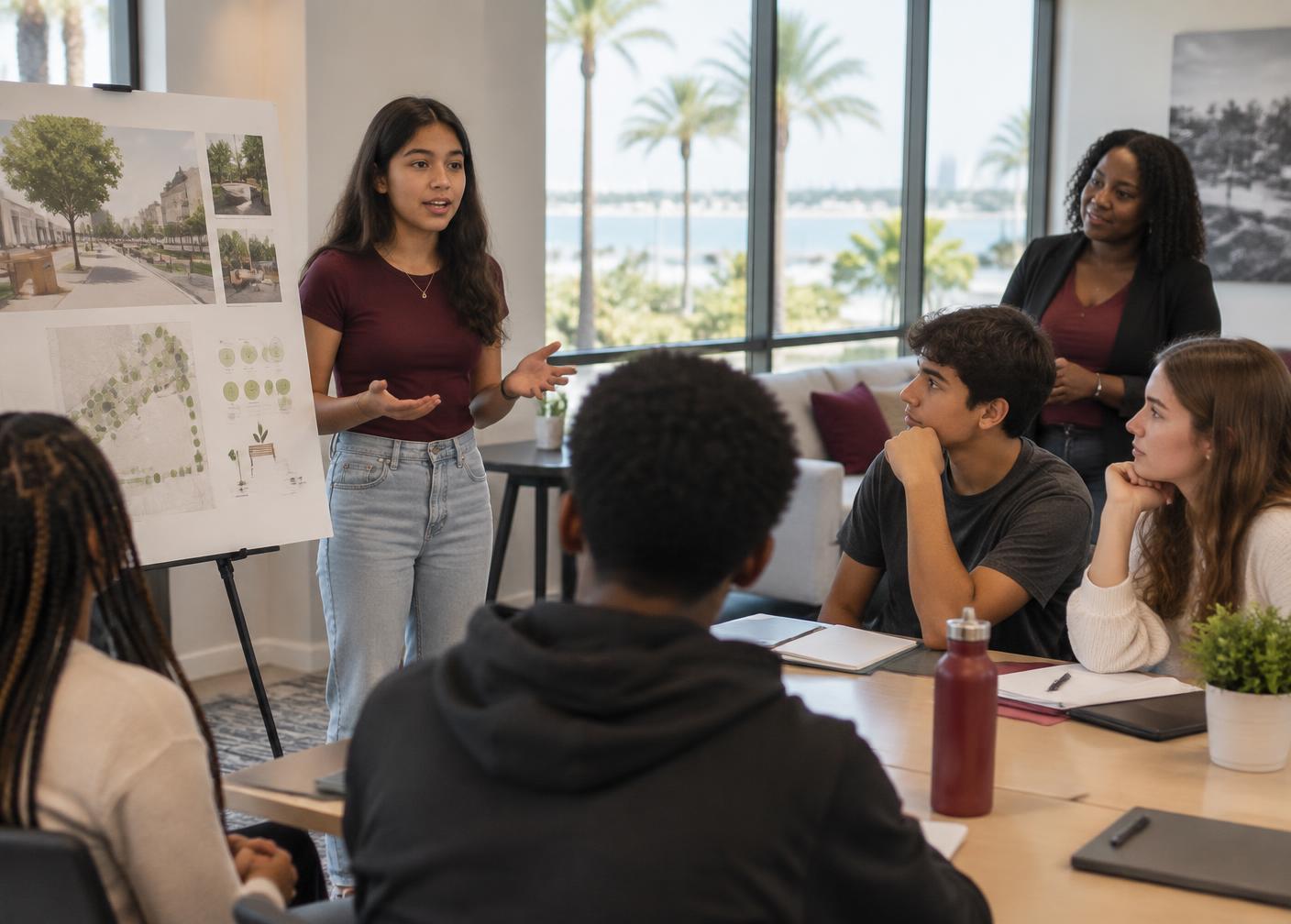
Participants evaluate eligible proposals using published criteria and participate in a structured selection process.
| Community Need & Benefit | 25% |
|---|---|
| Potential Impact | 25% |
| Feasibility | 20% |
| Inclusion & Community Value | 15% |
| Responsible Use of Resources | 15% |
Measurement & reflection
A project is not finished when the activity ends.
Participants learn that responsible community work requires documentation.
Each implemented project is reviewed against its original plan. The cohort examines what was accomplished, what it cost, what changed during implementation, what challenges occurred, and what should be improved next time.
Different community projects require different measures. Depending on the project, participants might document examples such as:
- Volunteers engaged
- Participants reached
- Materials distributed
- Items collected or donated
- Areas improved
- Families served
- Attendance
- Another project-specific measurable result
Examples only. Measures are chosen for each project and are not guaranteed outcomes.
The program treats reflection as part of leadership. Participants are expected not only to describe what went well, but also to identify what they would change.
Ready to learn by doing?
The next community idea may begin with them.
The GAB Youth Civic Leadership & Community Action Lab is designed for youth ages 13–17 who are willing to participate, collaborate, take responsibility, and contribute to meaningful community work.
Participation is limited. Joining the interest list does not guarantee enrollment. Upcoming cohort dates and enrollment details will be shared with interested families when finalized.